
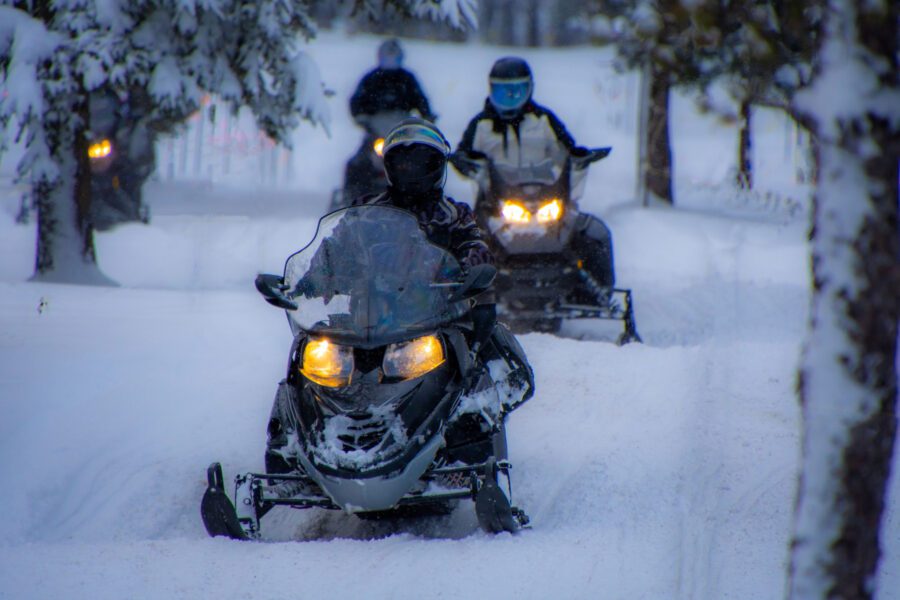
John Bednar, MD, hasn’t been on a snowmobile in years, but he’s seen firsthand what can happen to drivers and passengers if they don’t take proper precautions on the snowmobile trails.
Every year, 14,000 injuries and nearly 200 deaths are the result of snowmobiling accidents, according to the National Institutes of Health (NIH). The main causes are excess speed, alcohol, driver inexperience and poor judgment.
Snowmobile accidents range from ankle sprains to serious injuries such as brain, back and neck injuries, says Dr. Bednar, an emergency room physician with OSF HealthCare. He compares these accidents to the trauma seen in motorcycle mishaps.
“Snowmobile crashes can be absolutely horrendous, life threatening and such a tragedy if you have an unexpected accident, like we see every year,” he adds. “Deaths, severe spinal injuries, pelvic fractures, multiple broken bones that can be devastating, devastating injuries and totally unexpected when you’re out there to have fun.”
The biggest danger, without question, is consuming alcohol or drugs while using a snowmobile.
“I’ve seen very few snowmobile accidents that did not have some sort of intoxication involved or other preventive kind of reckless behavior,” says Dr. Bednar. “Intoxication, number one, by far, seems to be most involved in the crashes I’ve seen over the decades.”
Dr. Bednar says if it’s not alcohol related, the other common factor in snowmobile accidents is not being familiar with the surroundings. That’s especially the case for snowmobilers who travel away from home to ride in other parts of the Midwest.
“Know your trail and stay on your trail,” Dr. Bednar says. “If it’s a well-known, well-marked trail, then you’re much less likely to hit a stump, hit a rock, get off course, hit the tree, because that’s when we see the crashes. When they don’t know their trail, they use excessive speed, or they get off course, that’s when they hit the tree or the rock, and those things don’t like moving, and our heads don’t like sudden stops.”
Whether you’re driving your snowmobile day or night, it’s imperative to watch your speed – especially if you’re inexperienced or driving at night when visibility is limited.
Always wear proper protective gear when riding a snowmobile. That includes a helmet, goggles, gloves, wrist guards, shoulder pads, chest protectors, knee protection and supportive footwear. Your equipment can keep you safe but also serves as protection from frostbite and hypothermia.
“Most snowmobilers have great gear, including their helmets,” says Dr. Bednar. “But if you are going to go on ice, if you think it is safe ice, please consider wearing a life vest underneath your gear. We’ve seen multiple tragedies on thin ice.”
The Michigan Department of Natural Resources offers the following tips:
- Dress for the weather.
- Check the weather forecast and road conditions.
- Carry appropriate equipment for your activity, such as a flashlight, rope, ice picks or ice claws.
- Have spare equipment available in case something breaks.
- Stay hydrated and fueled – bring water and snacks.
- Bring a buddy.
- Tell others where you will be, how long you plan to be gone and schedule check-in times.
- Carry a two-way communication device that receives service in remote areas.
- Take an honest assessment of your health – if you’re not feeling well, don’t go out.
Whether you’re a weekend warrior or a sled head, these tips will ensure a safer trail ride this season.
***Courtesy of OSF HealthCare***