
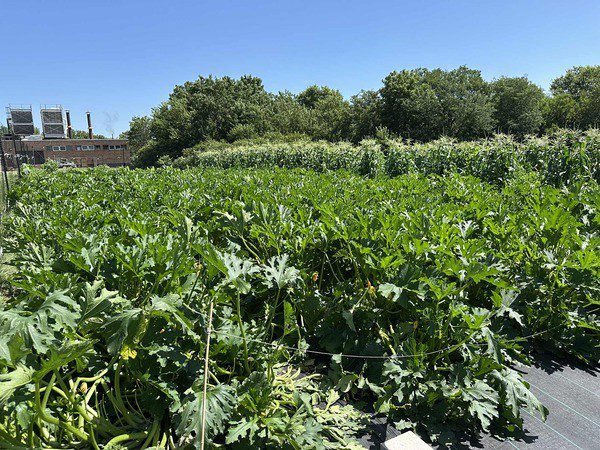
For most of the week, temperatures are expected to stay in the mid-90s, with heat index values reaching as high as 100 degrees and little relief at night. Chris Enroth says the prolonged heat and warm overnight temperatures will put added stress on plants.
“We’re probably going to start seeing more disease issues begin to manifest. Maybe some of those pest insects might start to take more advantage of a more heat-stressed plant,” says Enroth. “Even though we have had ample rain, we still kind of need to keep an eye on that soil moisture. A lot of our trees, shrubs and many of our perennials are going to be fine for the next several weeks, but we still have to keep an eye on some of those annuals, especially those vegetable garden plants, just to make sure our tomatoes and peppers stay nice and evenly irrigated.”
Enroth says inconsistent soil moisture, cycling from saturated conditions to bone-dry soil, can lead to problems like blossom end rot, a condition that causes the bottoms of fruits such as tomatoes and peppers to rot. Those moisture swings can also prevent plants from taking up calcium, resulting in a calcium deficiency.