Technology has changed the way that many farmers get their corn and soy bean fields sprayed. One of those ways would include spraying with a drone. Josh Oaks, a Spray Drone Operator with Mav-1 LLC, discusses more about the drone spraying process.
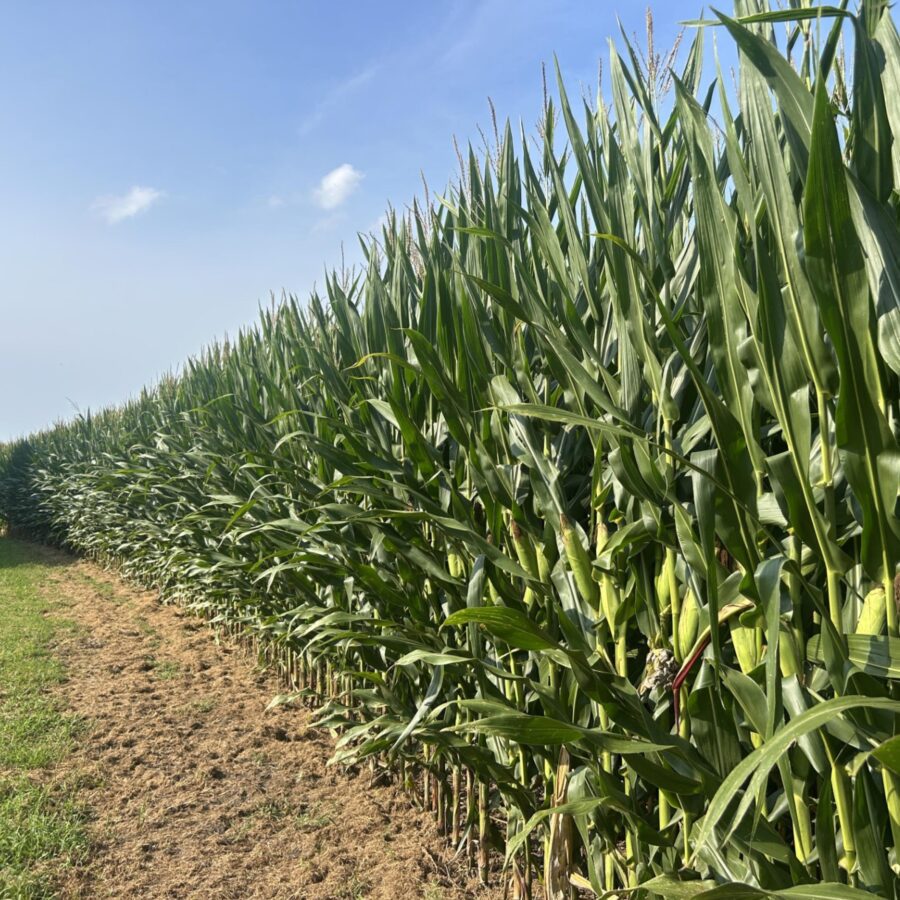
“We use a big drone, if you will, that is used to spray fungicide on corn fields and soy bean fields. You can also do some foliar, if that’s what you want to do, but the main focus right now is probably that fungicide pass, and try to protect the bushels that we’re trying to grow out there. For the most part, the drone does kind of fly itself, if you will, so you don’t have to pilot a ton of the time. Mainly, when you’re actually piloting the drone, that’s more on either takeoff or landing, so for the most part, it’s all GPS coordinates. You map the field through the controller and the drone decides what’s the most efficient way to spray that field, depending on how the field is shaped, and it decides that, okay I’m going to spray it diagonally or straight back and forth, and it sprays it the most efficient way. We typically spray, its customer preference, but a lot of times we’ll spray 2 gallons an acre, can’t spray up to 3 gallons an acre, it takes a little more time but that can be done. You kind of let the drone do its thing until you need to takeover and pilot and make sure it lands safely.”
Crops are growing, and schedules are getting busier. It’s amazing how technology can make tasks a little bit easier. Josh Oaks, Spray Drone Operator with Mav-1 LLC, takes on this busy time and explains how the drone spraying application works.
Written by WRAM/WMOI Intern Addisyn Switzer