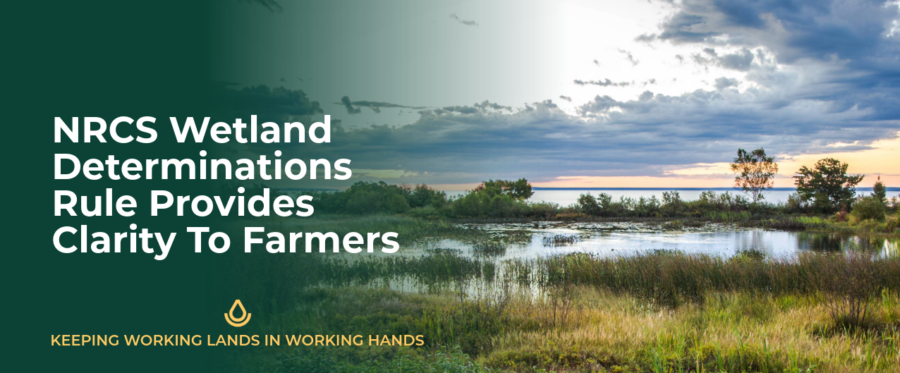
The U.S. Department of Agriculture (USDA) is putting farmers first and supporting government accountability by providing clear guidance around wetland determinations, which helps inform agricultural producers’ decisions for their operations. USDA’s Natural Resources Conservation Service (NRCS) published an interim final rule that ensures most determinations made since 1990 are considered certified, and producers can rely on the determinations to work farmland.
“We want to empower farmers, ranchers and landowners to do what they do best – farm the land,” said NRCS Chief Colton L. Buckley. “Farmers’ direct relationship with the land makes them uniquely qualified to guide its stewardship, and we took action to provide regulatory certainty in order to make operational decisions.”
Producers rely on certified wetland determinations when making decisions about their agricultural operations, which impacts USDA program eligibility such as farm loans, conservation assistance, crop insurance and commodity programs.
Through this interim final rule, NRCS addressed inconsistencies in how wetland determinations have been certified and issued in the past. It aligns USDA policy with statutory requirements, protects producer reliance interests, and reduces unnecessary administrative burden by preventing the reinterpretation or replacement of previously certified determinations unless the producer asks for a review.
Specifically, the interim final rule ensures all wetland determinations issued after Nov. 28, 1990, are certified if:
- the producer was notified of the determination; and
- the producer was given appeal rights at the time.
Farmers can rely on the decision to install drainage, clear land, and conduct other land alternations without risking USDA program eligibility so long as the determination shows the area is not a wetland in accordance with the Wetland Conservation provisions of the Food Security Act of 1985.
For more than 90 years, NRCS has helped farmers, ranchers and forestland owners make investments in their operations and local communities to improve the quality of our air, water, soil, and wildlife habitat. NRCS uses the latest science and technology to help keep working lands working, boost agricultural economies, and increase the competitiveness of American agriculture. NRCS provides one-on-one, technical advice and financial assistance and works with producers to help them reach their goals through voluntary, incentive-based conservation programs. For more information, visit nrcs.usda.gov.
More Information
To learn more about NRCS programs, producers can contact their local USDA Service Center. Producers can also apply for NRCS programs, manage conservation plans and contracts, and view and print conservation maps by logging into their farmers.gov account. If you don’t have an account, sign up today.
***Courtesy of the USDA***