
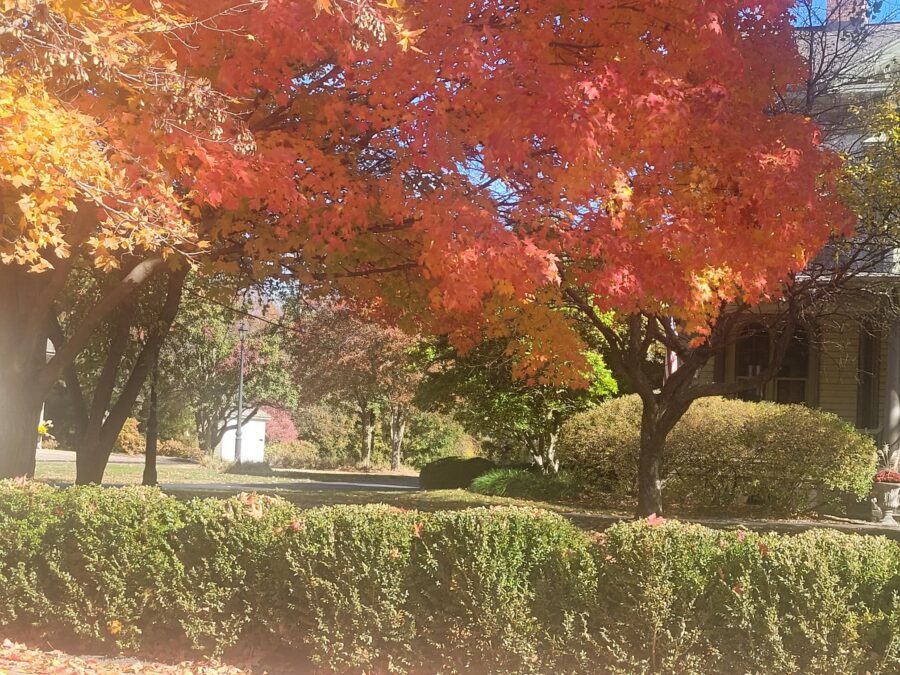
Now that cooler temperatures have arrived, along with shorter days, we’re starting to see leaves change color. In the next few weeks, we can look forward to our landscapes being awash in shades of brown, yellow, orange, and red. As the saying goes, though, all good things must come to an end. Eventually, all of those leaves will end up on the ground, leaving many of us wondering what to do with them.
One option to get rid of leaves on lawns is to mow them. It’s best to mow leaves when they are dry, so they don’t clump together, which can make them more difficult to chop and clog mowers. When mowing leaves, you should be able to see grass beneath the cut-up leaves. Chopping leaves into small pieces allows them to settle between grass blades and reach the soil surface, where soil microbes begin breaking them down. As the leaves are broken down, they will release nutrients that will be used by the grass.
If you have too many leaves to mow, consider incorporating some into your garden beds. Adding a 6 to 8-inch layer of leaves and incorporating them into garden soils can help improve them by increasing organic matter. In heavy clay soils, this will help with drainage and aeration, and in sandy soils, it will improve the soil’s ability to hold onto water and nutrients. If you decide to incorporate leaves into garden beds, it’s best to do this in the fall. This will allow plenty of time for the leaves to break down before spring planting.
Leaves can also be used as a mulch in vegetable gardens, flower beds, and around trees and shrubs. Mulch can help conserve soil moisture, moderate soil temperatures, prevent soil crusting and erosion, and help control weeds. As leaves break down, they also contribute nutrients and organic matter to the soil.
Leaves can be used to help insulate plants too. By using leaves as insulation, we can keep the plant and soil uniformly cold and prevent freezing and thawing cycles that can damage marginally hardy plants (some hybrid tea roses, lavender, figs, etc.). This can be done by placing shredded leaves around the crowns of these plants, or wire frames can be built and filled with leaves. If using leaves as insulation, don’t put them on plants until temperatures are consistently below freezing.
If you’ve ever done any composting, you know how valuable leaves can be as a ‘brown’ material. For the uninitiated, compost is a dark, crumbly, and earthy-smelling form of organic matter that has gone through a natural decomposition process. If you have a garden, lawn, trees, shrubs, or even planter boxes or houseplants, you have a use for compost.
While we often dread the appearance of leaves in our yards, they are a valuable and free resource for our landscapes. Before you use up all of your leaves, take some time to make a big pile of them, and relive your childhood.
Good Growing Tip of the Week: While we’re often in a hurry to clean up leaves in the fall, they can be important overwintering areas for a variety of wildlife. Many different types of insects, such as butterflies and bees, as well as other animals such as salamanders and toads, will rely on leaf litter as habitat. To conserve these animals, consider leaving part of your yard as is until spring.
***Courtesy of Ken Johnson, University of Illinois Extension, Horticulture Educator***