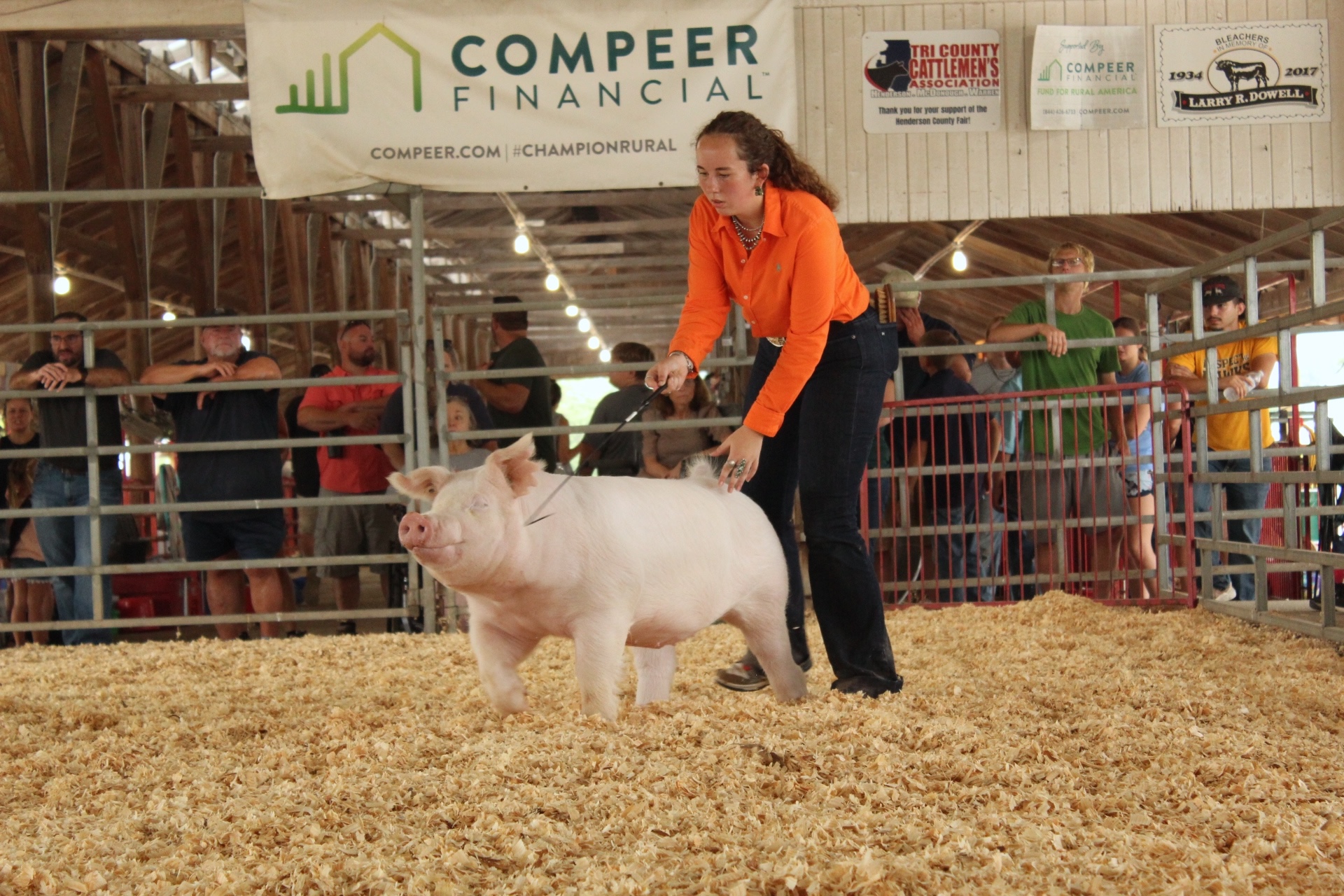
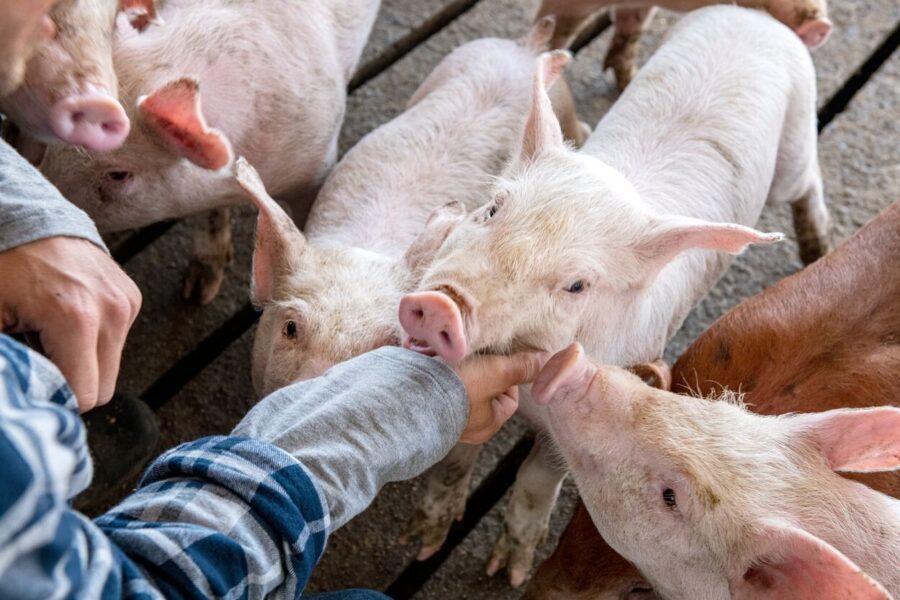
Over the last 20 to 30 years, the pork industry has undergone significant changes, shifting from small-scale farming to highly specialized, export-driven operations. From 2001 to 2020, the number of hogs processed in the United States increased by 34 percent, rising from 98 million to 131.5 million head.
Tyler Main, a pork producer in Knox County, has witnessed this shift firsthand.
“It’s changed a ton in my lifetime. There aren’t many independent producers like myself anymore. There are a lot of consolidated custom feeders working for large operators—which is fine—that’s just the way it is,” Main said. “But the small, independent producer is kind of a dinosaur anymore. It’s too bad it’s become that way, but it’s just the world we live in.”
These industry changes are also partly driven by growing demand for protein and evolving dietary guidelines.
“The new guidelines—that’s a big thing, not just for agriculture,” Main said. “Especially the protein part of it. That might not be a shock to a lot of us, that protein is good. I know I wasn’t shocked, but I’m glad to see it recognized and promoted that way.”
New dietary guidelines from the USDA, released in January 2026, emphasize nutrient-dense foods, whole foods, and healthy fats, while limiting highly processed foods and refined carbohydrates.